

Literature, Publishing, and Translation Commission Concludes the Riyadh International Philosophy Conference 2025
Riyadh International Philosophy Conference 2025
The fifth edition stood out for its rich intellectual presence and a robust academic program that addressed key philosophical issues and contemporary approaches. The opening day featured in-depth discussions on the nature and methods of philosophizing in both Eastern and Western traditions, exploring concepts of mimesis, existence, and philosophical distance, and their roles in shaping meaning and developing schools of thought. Sessions also traced the earliest roots of philosophy in ancient civilizations, Greek thought, and Eastern traditions, reaffirming that the question of origins remains a central entry point for understanding the evolution of philosophical concepts into the modern era.
Other sessions examined the relationship between philosophy, the absolute, and ethics; the shifts within contemporary philosophical thought; and the need to reintegrate philosophy into a unified epistemic framework capable of interpreting the complexities of modern reality. Participants discussed the essence of philosophizing in its theoretical and practical dimensions, the importance of methodological tools in generating concepts and analyzing problems, as well as the future of philosophy education in the Arab world and its role in cultivating critical thinking.
On the second day, the conference explored intersections between Eastern and Greek philosophies and the renewed global interest in Eastern thought since the 1970s. It also highlighted the influence of Ibn Sina and the Qur’anic dialogical tradition as philosophical models for constructing meaning and logical argumentation. Participants engaged with theories of communicative action, frameworks of justice and respect in dialogue, and the role of the Arabic language in shaping philosophical concepts, developing terminology, and structuring argumentative discourse.
The final day offered expansive discussions on philosophical interactions between East and West in the modern era and on the transformations of today’s philosophical landscape. Sessions covered topics such as geophilosophy, building intellectual bridges, children’s literature and philosophy, and featured celebrated thinker Dr. John Armstrong in a session titled “The Future of Beauty.” Additional panels examined intellectual coexistence, the shared language between philosophical schools, and how Eastern and Western philosophies respond to contemporary issues.
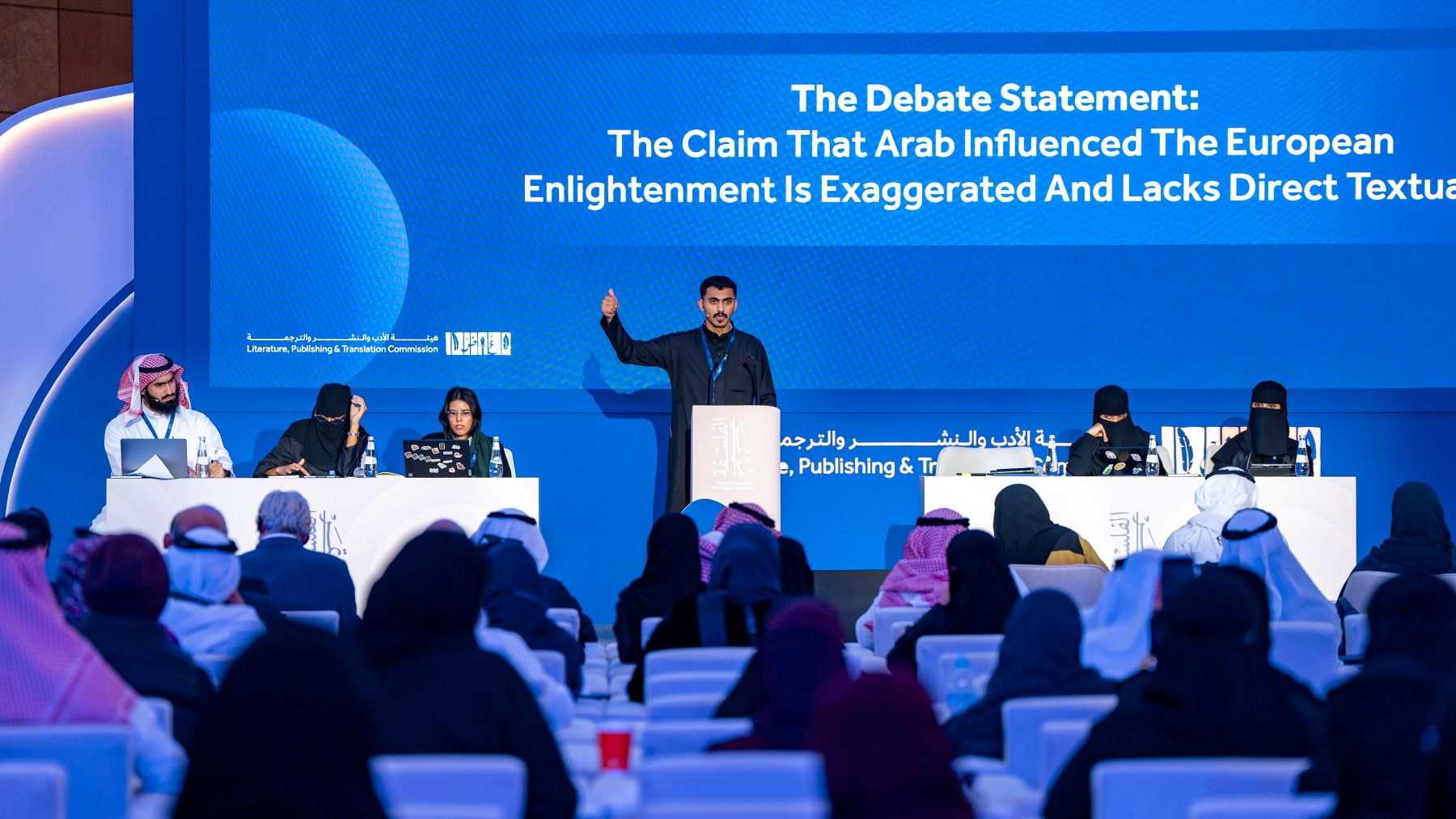
The conference also hosted a series of philosophical debates featuring students from Saudi universities, spanning three days of thoughtful dialogue and rich intellectual exchange. Participants presented an inspiring model for the future of philosophy in the Kingdom, marked by critical insight and a genuine pursuit of meaning. The debates concluded with a final competition on the closing day, in which the winning team was honored by the Commission’s CEO, Dr. Abdulatif bin Abdulaziz Al-Wasel—an embodiment of the Commission’s commitment to supporting and empowering young talent.
Throughout the three days, the conference included workshops on philosophical argumentation, modern epistemic challenges, and ways to draw from philosophical heritage in shaping contemporary intellectual visions. These sessions offered specialists and enthusiasts practical training opportunities to move philosophy from theory into practice.
The fifth edition featured the participation of 60 speakers, philosophers, thinkers, and researchers from around the world, and more than 40 dialogue sessions exploring the roots and developmental trajectories of philosophy. The conference welcomed over 7,000 visitors, reflecting the growing interest in philosophy and the humanities within the Kingdom.
The event concluded amid wide praise for its scholarly content and the engaging discussions across its platforms, reaffirming its place as a global philosophical forum that advances intellectual awareness and strengthens the Kingdom’s role in shaping the regional and international cultural and intellectual landscape, aligned with the goals of Saudi Vision 2030 to support knowledge and human development.
Osama Alsheikh
Benchmark
email us here
Legal Disclaimer:
EIN Presswire provides this news content "as is" without warranty of any kind. We do not accept any responsibility or liability for the accuracy, content, images, videos, licenses, completeness, legality, or reliability of the information contained in this article. If you have any complaints or copyright issues related to this article, kindly contact the author above.
